Newer
Rephrase Your Words ①: Rephrasing 「ちょっと待って」 to fit the listener
11/06/2025
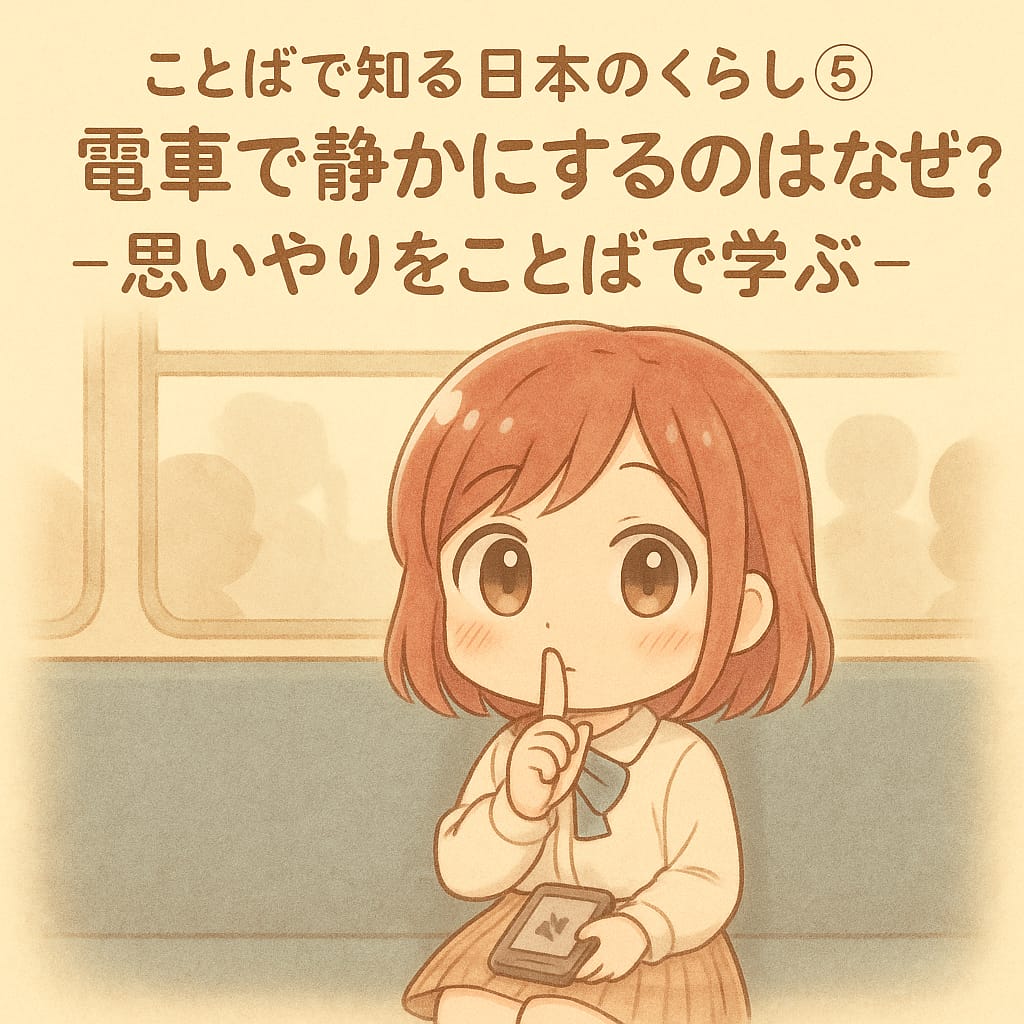
On Japanese trains, people spend time quietly. They lower their voices and set phones to silent to keep a calm mood. This quietness is one part of public manners in Japan.
Why do people keep quiet on trains? The answer is “consideration for others.” In this article, we learn the reason and gentle ways to say it in Japanese.
| Japanese | Reading | IPA | Meaning & usage |
|---|---|---|---|
| 「ご遠慮ください」 | ごえんりょください | [ɡo eɴɾʲo kɯdasai] | A soft way to ask people not to do something. Example: 「通話はご遠慮ください。」 (Please avoid phone calls.) |
| 「お静かにお願いします」 | おしずかにおねがいします | [o ɕizɯka ni o neɡai ɕimasɯ] | A polite request to keep quiet for others. |
| 「マナー」 | まなー | [manaː] | Manners/rules of behavior; important as public manners in Japan. |
| 「思いやり」 | おもいやり | [omoijaɾi] | Caring about others and not causing trouble. |
| 「ご協力ください」 | ごきょうりょくください | [ɡo kʲoː ɾʲokɯdasai] | A request to join and follow a rule together. |
| 「〜ないでください」 | 〜ないでください | [naide kɯdasai] | A gentle “please don’t …”. Example: 「大声で話さないでください。」 (Please don’t speak loudly.) |
IPA is a guide for learners. Sounds may change a little by region or speaking style.
In Japan, keeping quiet in public places is seen as kindness to others. In a train, many strangers share one space. So “not disturbing others” is important.
In Japanese, “quiet (静か)” can also mean a calm heart. Keeping quiet protects peace for people around you and for yourself.
Some people are not feeling well. Some have babies. Some are waiting for urgent work calls. Keeping quiet can help people in a weaker position.
In Japanese, people often use requests instead of orders. In public places like trains and buses, polite forms are important.
Example: 「席をゆずってください。」 (Please give your seat.) This is a basic, gentle request.
Example: 「大声で話さないでください。」 (Please don’t speak loudly.) It tells a wish without blaming.
Example: 「他の人の迷惑にならないようにしましょう。」 (Let’s try not to bother others.) It asks for cooperation including yourself.
Example: 「ここで話してもいいですか。」 (Is it OK to talk here?) It checks the other person’s feeling.
Small changes in phrasing make a big change in feeling. Gentle words show respect and care.
Different places feel “quiet” in different ways. Knowing the differences helps us see Japan’s special points.
These are differences, not better or worse. Each culture has its own form of kindness.
Scene: You want to talk with a friend in a small voice.
– A: 「ここで少し話してもいいですか。」 (May we talk a little here?) – B: 「はい、いいですよ。声は小さくしましょう。」 (Yes, of course. Let's keep our voices low.) – A: 「ありがとうございます。通話はしないでおきます。」 (Thank you. I won't make phone calls.)
| Expression | Point |
|---|---|
| 「〜してもいいですか。」 | A polite way to ask for permission. |
| 「声は小さくしましょう。」 | A proposal that includes both you and the other person. |
| 「通話はしないでください。」 | A gentle “please don’t …”; common on signs. |
Next: “Life in Japan Through Words (6)” — theme idea: the feeling inside the greeting 「いらっしゃいませ」。