Newer
Learning About Life in Japan Through Words (4) How to say “thank you” in Japan without tipping?
11/02/2025
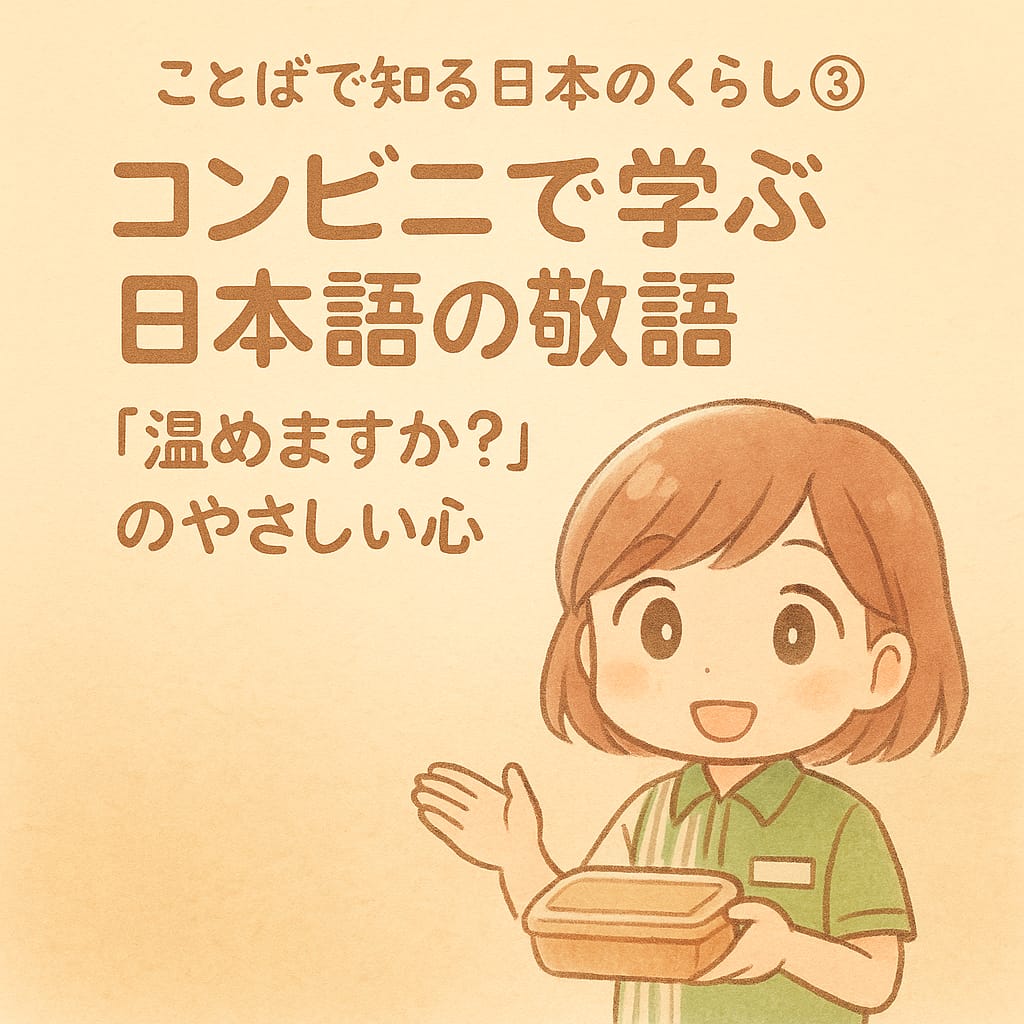
In any convenience store in Japan, staff speak very politely. Short phrases like 「温めますか?」 and 「袋はご利用ですか?」 carry kindness.
In this article, we learn how Japanese shows care with words, using common phrases from convenience stores.
| Japanese | Pronunciation | Meaning / Usage |
|---|---|---|
| 「温めますか?」 | 「あたためますか?」 [atatamemasɯ ka] | A polite question asking if it is okay to warm your food in the microwave. |
| 「袋はご利用ですか?」 | 「ふくろ は ごりよう ですか?」 [ɸɯkɯɾo wa ɡo ɾijoː desɯ ka] | A polite way to ask if you need a bag. |
| 「○○円になります」 | 「○○えん になります」 [en ni naɾimasɯ] | A set phrase to politely state the total price. |
| 「お預かりします」 | 「おあずかり します」 [o a zɯ kaɾi ɕimasɯ] | A polite way to say “I will take your cash/coupon now.” |
| 「少々お待ちください」 | 「しょうしょう おまち ください」 [ɕoːɕoː oma tɕi kɯdasai] | A polite way to ask you to wait a short moment. |
| 「レシートはご入用ですか?」 | 「れしーと は ごいりよう ですか?」 [ɾeɕiːto wa ɡo iɾijoː desɯ ka] | A polite way to ask if you need the receipt. |
| 「温めなくて大丈夫です」 | 「あたためなくて だいじょうぶ です」 [atatamenakɯte daidʑoːbɯ desɯ] | A gentle reply to decline warming. |
Tip: These questions are signs of choice and care. They are not orders. The staff is asking for your preference.
Clerk: Would you like me to heat it up? (「温めますか?」)
Customer: Yes, please. (「お願いします」)
Clerk: Do you need a bag? (「袋はご利用ですか?」)
Customer: No, thanks. I have a reusable bag.
Clerk: Certainly. That will be ○○ yen. (「○○円になります」)
Customer: I will pay by e-money.
Clerk: I will take it. Please wait a moment. … Thank you. Do you need the receipt? (「お預かりします」「少々お待ちください」「レシートはご入用ですか?」)
Customer: Yes, please.
In Japan, people often talk about caring for the customer. Sometimes, however, requests go too far. This is called 「カスタマーハラスメント(カスハラ)」 in Japanese.
The heart of 「おもてなし」 is not to put the customer “above.” It is to keep good balance so both sides feel comfortable. Service is built on goodwill and trust. Goodwill should meet goodwill on both sides.
Remember: both clerk and customer are people. Let tone and attitude show mutual respect.
Many phrases you hear in convenience stores use the polite style 「〜ます」「〜です」.
| Casual | Polite |
|---|---|
| 「温める?」 | 「温めますか?」 |
| 「袋いる?」 | 「袋はご利用ですか?」 |
| 「ちょっと待って」 | 「少々お待ちください」 |
| 「お金 もらうね」 | 「お預かりします」 |
These polite endings act like a soft cushion. They keep a gentle distance and carry the message “I care about you,” together with a calm voice.
Hint: Think “polite style = a tool to show care,” not “polite style = stiff language.”
The phrase 「温めますか?」 is common in Japan, but the feeling of care is universal.
In every country, asking for the other person’s preference before acting is a shared kindness. Japanese often expresses this kindness with polite forms and a gentle voice.
Next: Everyday Japan Through Words ④
How to say “thank you” in Japan where there are no tips?