Newer
Learning About Life in Japan Through Words ③ Polite Japanese at Convenience Stores: the gentle intent in 「温めますか?」
10/24/2025
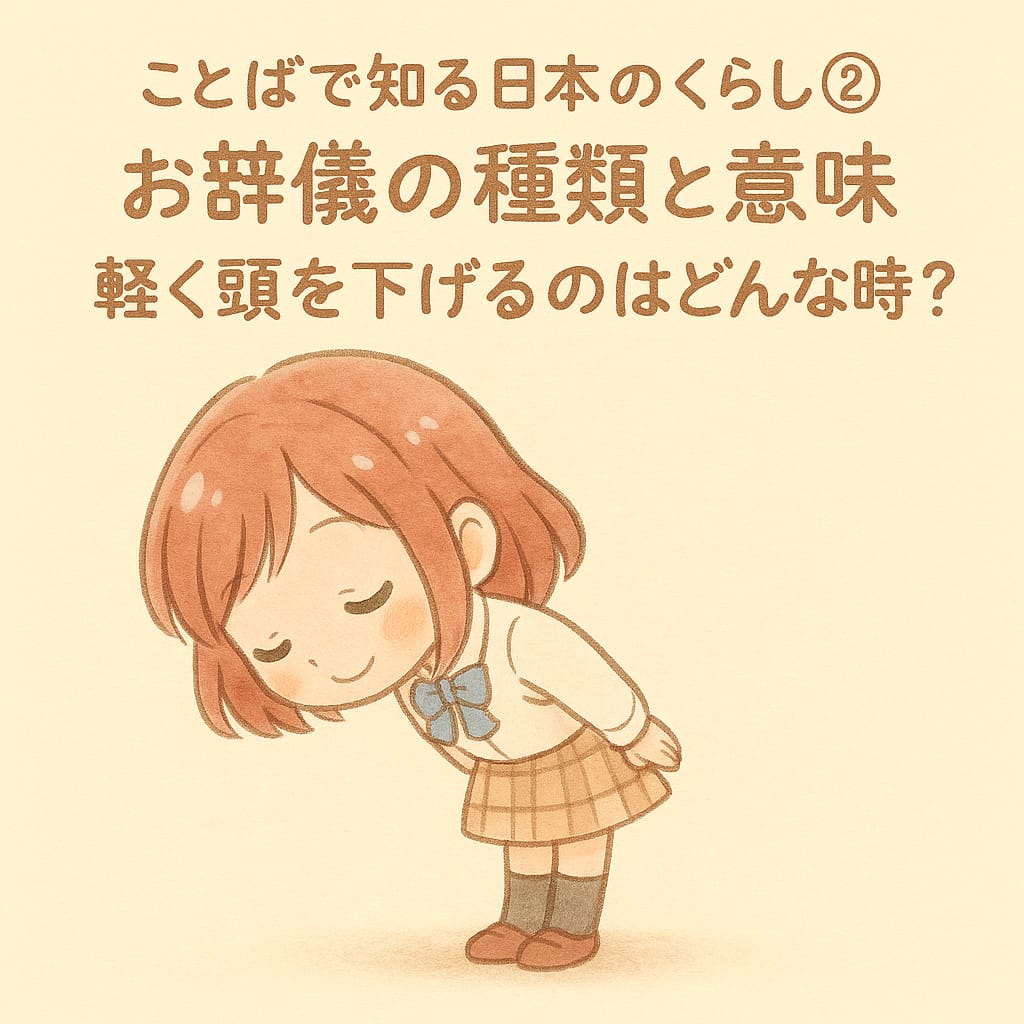
In Japan, people bow(「お辞儀(おじぎ)」)when greeting, showing thanks, or apologizing. It’s not only lowering the head. Depending on the situation, the angle and the words change.
In this article, we learn the action and the words together, so you can understand Japanese politeness in a practical way.
| Japanese | Reading | Meaning & use |
|---|---|---|
| 「会釈」 | (えしゃく [eɕakɯ]) | A light bow for brief greeting. When passing by or making eye contact. |
| 「敬礼」 | (けいれい [keːɾeː]) | A polite, deeper bow. For customers or to seniors at work. |
| 「最敬礼」 | (さいけいれい [saikeːɾeː]) | The deepest, longest bow. For apology or deep gratitude. |
| 「失礼します」 | (しつれい します [ɕitsɯɾeː ɕimasɯ]) | Said when entering/leaving a room; shows respect and care. |
| 「よろしくお願いします」 | (よろしく おねがいします [joɾoɕikɯ oneɡai ɕimasɯ]) | A fixed phrase to ask for cooperation or future relation. |
Examples:
Point: Combine action and words. Either one alone feels incomplete.
Japanese bowing is completed together with words. For example, say 「失礼します」(Excuse me)with a light bow, or say 「ありがとうございます」(Thank you)with a polite bow.
“Only words” or “only attitude” can feel lacking. Together, they become proper etiquette. Even a quiet movement can show respect.
| Type | Angle | Common situations | Common phrases |
|---|---|---|---|
| 会釈 | about 15° | passing by; light greeting | 「こんにちは」(Hello)「お疲れ様です」(Thank you for your hard work) |
| 敬礼 | about 30° | customer service; greeting a superior | 「ありがとうございます」(Thank you)「よろしくお願いします」(Thank you in advance) |
| 最敬礼 | about 45° | apology; deep thanks; formal scene | 「申し訳ございません」(I’m truly sorry)「心より感謝申し上げます」(I sincerely thank you) |
The deeper the angle, the stronger your respect and feelings. 会釈 is for light greeting; 最敬礼 shows deep apology or gratitude.
When seated, the idea is the same: straighten your back and match words with movement.
Both are humble forms that lower oneself and raise the other person.
Examples:
Examples:
Note: 「申し上げます」 pairs well with 最敬礼. Together with a deep bow, it shows the highest respect.
| Action | Matching words | Background |
|---|---|---|
| Light bow | 「お疲れ様です」(おつかれさまです [otsɯkaɾe sama desɯ])(Thank you for your hard work) | Kind regard; keeping social distance |
| Polite bow | 「ありがとうございます」(ありがとう ございます [aɾiɡatoː ɡozaimasɯ])(Thank you) | Showing gratitude in visible form |
| Deep bow | 「申し訳ございません」(もうしわけ ございません [moːɕiwake ɡozaimasen])(I’m truly sorry) | Emphasizing respect and reflection |
| Enter a room | 「失礼します」(しつれい します [ɕitsɯɾeː ɕimasɯ])(Excuse me) | Manners before entering someone’s “inside” |
| Ending a talk | 「よろしくお願いします」(よろしく おねがいします [joɾoɕikɯ oneɡai ɕimasɯ])(Thank you in advance) | Wishing for a good continuing relation |
| Before hanging up | 「失礼いたします」(しつれい いたします [ɕitsɯɾeː itaɕimasɯ])(Excuse me) | Staying polite even on the phone |
A: 「おはようございます」(Good morning). (会釈) B: 「おはようございます」(Good morning). (会釈)
Clerk: 「ありがとうございます」(Thank you). (敬礼) Customer: 「お願いします」(Please). (light 会釈)
Staff: 「このたびはご迷惑をおかけして、申し訳ございません」(I’m very sorry). (最敬礼) Boss: 「今後は気をつけてください」(Please be careful next time).
Visitor: 「失礼します」(Excuse me). (会釈して入る) Host: 「よろしくお願いいたします」(Thank you in advance). (敬礼)
Next: 「ことばで知る日本のくらし③」(Everyday Japan through Words ③)
「コンビニで学ぶ日本語の敬語 ─ 『温めますか?』にある思いやり」(Honorifics at the convenience store ─ the care behind “Shall I warm it up?”)