Newer
Aisatsu: Meaning and Origins — A Japanese word that opens the heart
10/17/2025
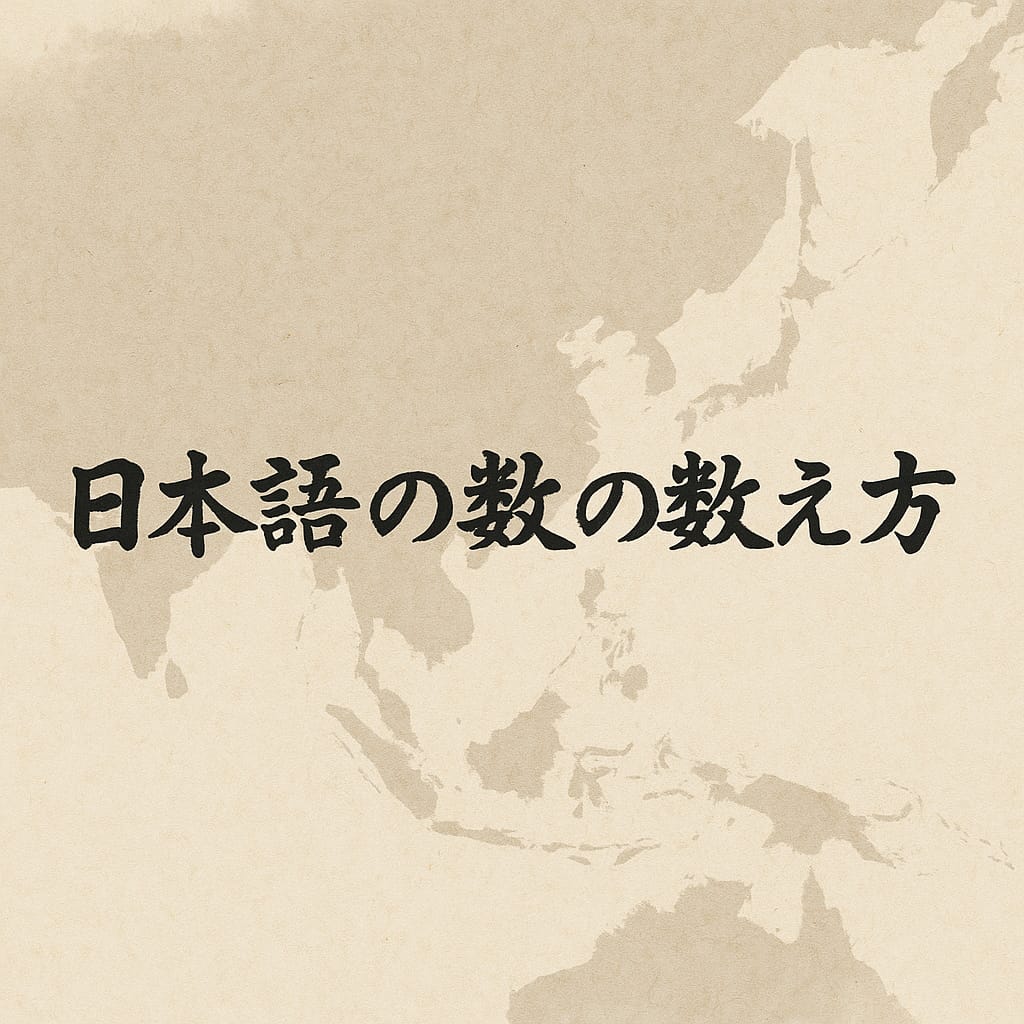
Japanese keeps two systems for counting: the native 「ひとつ・ふたつ・みっつ…」 and the Sino-Japanese 「いち・に・さん…」. Globally, it is not very common for one language to keep two strong systems side by side. Japanese values older words while also adopting useful systems from abroad.
This article targets beginner learners (CEFR A2). We use clear sentences and explain terms simply. Japanese text appears only inside 「」 or( ) with translations in parentheses.
「ひとつ」「ふたつ」「みっつ」 are old native words in Japanese. A key point: this set goes only up to 「とお(ten)」. There are no native words for eleven or twelve.
In old writing, people used explanatory phrases like 「とおあまりひとつ」(ten and one). This system was used more to feel amounts in daily life than to do exact calculation.
The native system still sounds warm and familiar in conversation today.
The sequence 「いち・に・さん・し・ご…」 came from Chinese. It fits base‑10 well and builds larger numbers by combination.
例:十一(じゅういち)/十二(じゅうに)/百(ひゃく)/千(せん)/一万人(いちまんにん) (Examples: eleven / twelve / hundred / thousand / ten thousand people)
For public documents, education, and Buddhist texts, accuracy and efficiency mattered. This is why the Sino-Japanese set spread for counting and record keeping.
Pronunciation tips you will meet often:
Japanese uses counters (words attached to numbers for kinds of things). Many counters go with the Sino-Japanese numbers. For small counts up to ten, the native 「〜つ」 is also common.
| Item | Counter | Common forms |
|---|---|---|
| General objects | 「〜つ」 | 「ひとつ」「ふたつ」「みっつ」…「とお」 |
| People | 「〜にん」 | 「ひとり」「ふたり」「さんにん」「よにん」… |
| Long thin objects | 「〜ほん」 | 「いっぽん」「にほん」「さんぼん」… |
| Thin flat objects | 「〜まい」 | 「いちまい」「にまい」「さんまい」… |
| Small animals | 「〜ひき」 | 「いっぴき」「にひき」「さんびき」… |
| Time | 「〜じ」「〜ふん」 | 「いちじ」「にじ」…/「いっぷん」「にふん」「さんぷん」… |
Tips:
In modern Japanese, the two systems share roles.
| Use | Common choice | Examples |
|---|---|---|
| Everyday, sensory | Native 「〜つ」 | 「みっつ」「よっつ」「とお」 |
| Calculation, units | Sino-Japanese | 「さんにん」「じゅうえん」「ろっぽん」 |
| Age | Sino-Japanese 「〜さい」 | 「いっさい」「はたち(special case)」「にじゅういっさい」 |
| Money, time | Sino-Japanese | 「ごひゃくえん」「さんじゅっぷん」 |
Rather than simply keeping something old, Japanese found living roles for both the native set and the Sino-Japanese set.
Japanese 「いち・に・さん」 comes from Chinese 「一 yī・二 èr・三 sān」. Similar sounds spread to Korea and Southeast Asia through history.
| Language | 3 | 4 | 10 |
|---|---|---|---|
| Chinese | sān | sì | shí |
| Korean | 삼 (sam) | 사 (sa) | 십 (sip) |
| Thai | สาม (sǎːm) | สี่ (sìː) | สิบ (sìp) |
| Vietnamese (Sino‑Vietnamese) | tam | tứ | thập |
| Japanese | 「さん」 | 「し/よん」 | 「じゅう」 |
These links grew from cultural exchange. Chinese once worked as a shared language for Buddhism, trade, and government writing.
Japanese adopted Chinese number words but did not abandon the native set. Besides convenience, it also kept a way of feeling the world through words.
The three scripts—hiragana, katakana, and kanji—also helped keep different layers of words alive. So Japanese became a language where an old native sense and an imported system live together.