<- Back to blog

Language as a Mirror — Japanese Culture Through Words

Kotoba Drill Editor

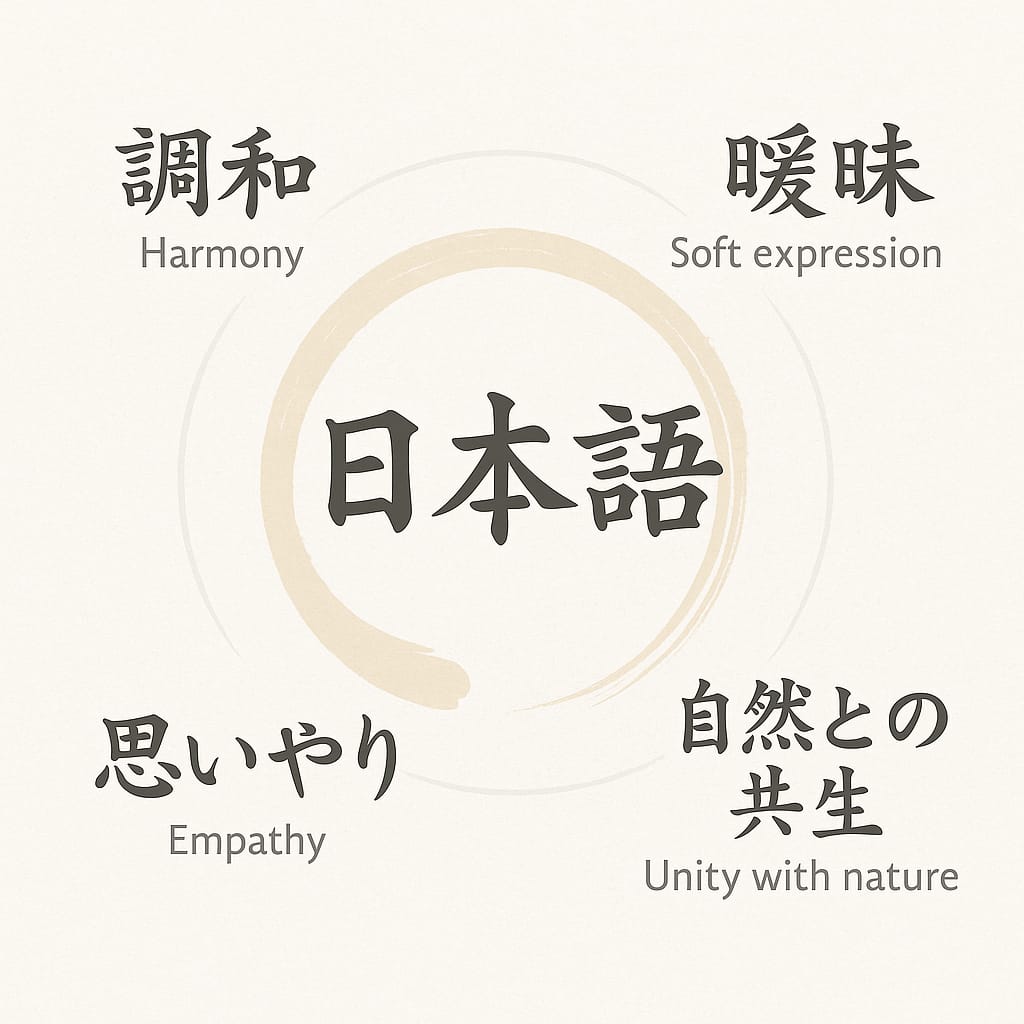
People often say "Japanese is difficult." Inside that difficulty is a way of thinking Japanese people have long valued. Language reflects the heart: even word choice or a short silence can carry care and respect.

This series looks at Japanese culture through the Japanese language. In this first article, we explain key features in everyday situations, using plain English and real phrases.

1. A language of harmony

Japanese often aims to keep the relationship good rather than to win an argument.

  • Backchannel responses (aizuchi): short signals like 「なるほど」 or 「そうですね」 to match the speaker's rhythm. They make conversation smoother and closer.
  • Empathy first: 「お気持ちはわかりますが」(okimochi wa wakarimasu ga; I understand how you feel, but …) frames disagreement gently.
  • Honorific system: three layers: 「尊敬語」(sonkeigo: respectful), 「謙譲語」(kenjougo: humble), 「丁寧語」(teineigo: polite). These let speakers adjust distance and respect. For example, 「伺います」 lowers yourself, while 「いらっしゃいます」 raises the other person.

Other tools that support harmony:

  • Dropping the subject: When context is clear, people say 「行きます」(will go) without 「I」. Focus stays on action.
  • Sentence-ending particles: "ね (ne)" invites shared feeling, "よ (yo)" adds new information, "かな (kana)" softens with uncertainty.
  • Shared pause (間/ま, ma): A short silence is not rejection; it often means "I'm thinking" or "I care."
Callout

Japanese carries not just information, but the temperature of the relationship.

2. Softness in ambiguity

Japanese often uses gentle forms (婉曲表現) like "うーん、どうしよう", "今回は見送りで (Let's pass this time)", or "検討します (We will consider it)". The aim is not to avoid responsibility, but to protect the person and the future relationship.

  • A gentle "no": Wrap "できません (we cannot)" with reason or timing. Example: "今日は難しいのですが、来週なら可能です (Today is difficult, but next week works)."
  • Not making it all about "I": Phrases like "〜と思います (I think)" or "〜の可能性があります (there is a possibility)" avoid hard conflict.
  • Leave room at the end: "またご相談ください (Please let’s talk again)."
Note

In some cultures, 「検討します」(kentou shimasu) may be heard as a soft "No". If you must decline clearly without hurting, try: 「ありがとうございます。今回は見送らせてください。次の機会にお願いします。」("Thank you. Please allow us to pass this time; perhaps next time.")

Expression typePurposeExample
Cushion words (クッション言葉)Soften impact, show respect「恐れ入りますが…」/「差し支えなければ…」
Answers with roomKeep relation without a hard end「前向きに検討します」/「社内で共有します」
Alternative proposalOffer a path instead of "No"「今回は難しいですが、来月なら…」

3. Nature and people together

Japanese often talks about nature like a person: "風が気持ちいい (the wind feels nice)", "花が笑う (flowers smile)". People are part of nature, not outside it.

  • The four seasons: Words connect scenes and feelings: "花冷え", "夕立", "小春日和".
  • Seasonal words: in haiku and waka, seasonal words carry both scene and emotion.
  • Mono no aware: a sensitivity to the beauty of change and passing(enjoying both full bloom and falling petals).

4. Words with heart

Japanese greetings are small rituals of care, not only start/end signals.

  • 「いただきます」(gratitude before eating).
  • 「ごちそうさま」(thanks after eating).
  • 「おつかれさまです」(I see your effort; thank you for your work).
  • 「よろしくお願いします」(a versatile phrase for requests and starting a relationship).
Callout

Put heart into everyday words. This sits at the root of Japanese culture.

Conversation phrase guide

  • Decline softly: Thanks + reason now + alternative (time/method). Example above.
  • Ask gently: 「もし可能でしたら/差し支えなければ」 + request + deadline.
  • Build agreement: 「賛成です。その上で…」 then propose.
  • Aizuchi: 「なるほど」「勉強になります」「たしかにそうです」。

Glossary (Japanese term + romaji + translation)

あいづち (aizuchi)
Short responses that show listening and empathy. Examples: 「はい」「なるほど」.
クッション言葉 (kusshon kotoba)
Soft words before a direct statement: 「恐れ入りますが…」「差し支えなければ…」.
もののあわれ (mono no aware)
Sensitivity to the beauty of change and passing.
間(ま) (ma)
The meaningful pause between words; time for thinking or care.
終助詞 (shū-joshi)
Sentence-ending particles: 「ね/よ/かな」.
主語を省く (omit the subject)
When context is clear, Japanese often omits I/you.

Closing

Learning Japanese is not only grammar and words. It is also learning how people see the world and relate to others. Through words, we learn the culture.
* This article describes general tendencies. Individual speech styles differ by person, region, and age.

More articles