Newer
Learning About Life in Japan Through Words ③ Polite Japanese at Convenience Stores: the gentle intent in 「温めますか?」
24/10/2025
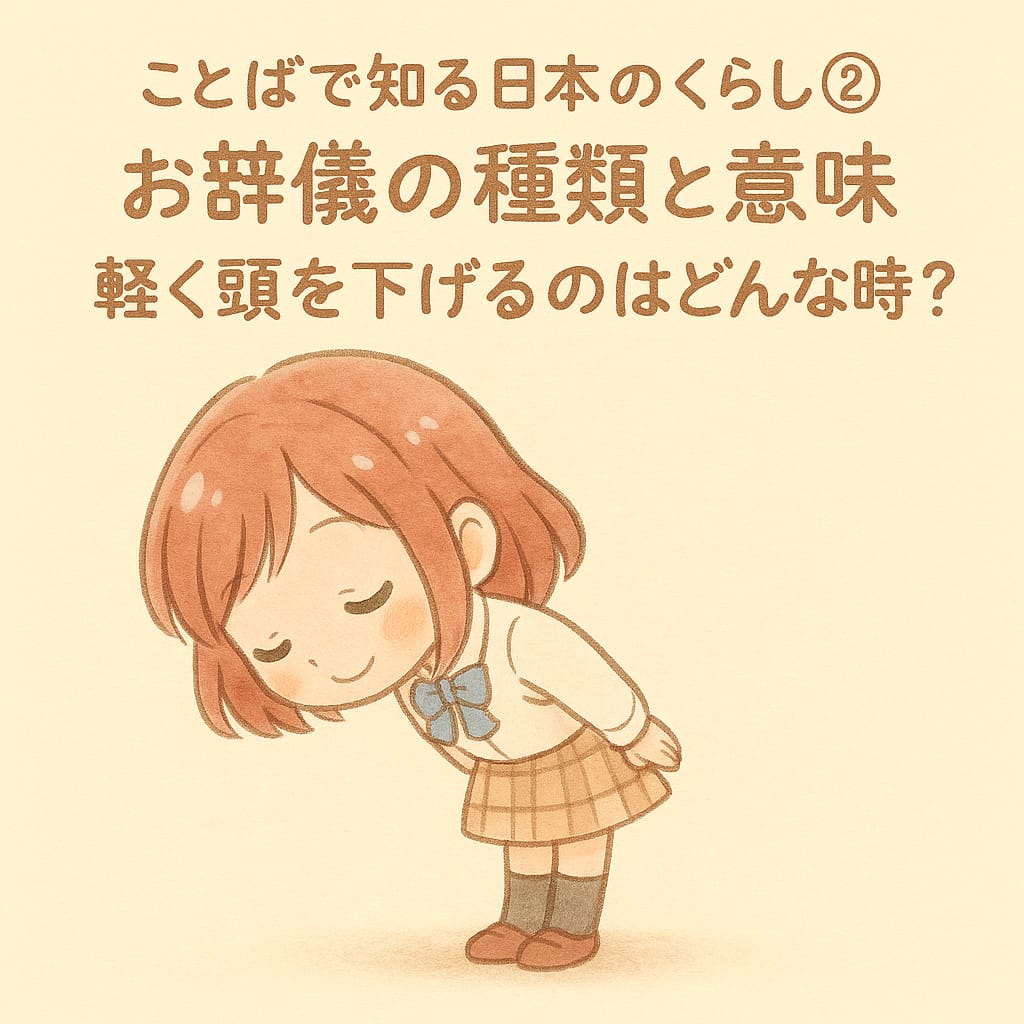
In Japan, people bow(「お辞儀(おじぎ)」)when greeting, showing thanks, or apologising. It is not only lowering the head; depending on the situation, the angle and the words change.
This article pairs movement with language so you can understand Japanese politeness in everyday scenes.
| Japanese | Reading | Meaning & use |
|---|---|---|
| 「会釈」 | (えしゃく [eɕakɯ]) | Light bow for brief greeting. Passing by or making eye contact. |
| 「敬礼」 | (けいれい [keːɾeː]) | Polite, deeper bow. For customers or greeting a superior. |
| 「最敬礼」 | (さいけいれい [saikeːɾeː]) | Deepest, longest bow. For apology or deep gratitude. |
| 「失礼します」 | (しつれい します [ɕitsɯɾeː ɕimasɯ]) | Said when entering/leaving a room; shows respect. |
| 「よろしくお願いします」 | (よろしく おねがいします [joɾoɕikɯ oneɡai ɕimasɯ]) | Fixed phrase asking for cooperation/continued relation. |
Examples:
Point: Combine action and words. Either one alone feels incomplete.
Japanese bowing is completed together with words. Say 「失礼します」(Excuse me)with a light bow, or 「ありがとうございます」(Thank you)with a polite bow.
“Only words” or “only attitude” can feel lacking. Together, they become proper etiquette. A quiet movement also shows respect.
| Type | Angle | Common situations | Common phrases |
|---|---|---|---|
| 会釈 | about 15° | passing by; light greeting | 「こんにちは」(Hello)「お疲れ様です」(Thank you for your hard work) |
| 敬礼 | about 30° | customer service; greeting a superior | 「ありがとうございます」(Thank you)「よろしくお願いします」(Thank you in advance) |
| 最敬礼 | about 45° | apology; deep thanks; formal scene | 「申し訳ございません」(I’m truly sorry)「心より感謝申し上げます」(I sincerely thank you) |
The deeper the angle, the stronger the respect and feeling. 会釈 is for light greeting; 最敬礼 shows deep apology or gratitude.
When seated, keep the same idea: straighten your back and match words with movement.
Both are humble forms used to raise the listener.
Examples:
Examples:
Note: 「申し上げます」 pairs well with 最敬礼. With a deep bow, it shows highest respect.
| Action | Matching words | Background |
|---|---|---|
| Light bow | 「お疲れ様です」(おつかれさまです [otsɯkaɾe sama desɯ])(Thank you for your hard work) | Kind regard; keeping social distance |
| Polite bow | 「ありがとうございます」(ありがとう ございます [aɾiɡatoː ɡozaimasɯ])(Thank you) | Showing gratitude in form |
| Deep bow | 「申し訳ございません」(もうしわけ ございません [moːɕiwake ɡozaimasen])(I’m truly sorry) | Respect plus reflection |
| Enter a room | 「失礼します」(しつれい します [ɕitsɯɾeː ɕimasɯ])(Excuse me) | Manners before entering someone’s “inside” |
| Ending a talk | 「よろしくお願いします」(よろしく おねがいします [joɾoɕikɯ oneɡai ɕimasɯ])(Thank you in advance) | Wish to continue a good relation |
| Before hanging up | 「失礼いたします」(しつれい いたします [ɕitsɯɾeː itaɕimasɯ])(Excuse me) | Staying polite on the phone |
A: 「おはようございます」(Good morning). (会釈) B: 「おはようございます」(Good morning). (会釈)
Clerk: 「ありがとうございます」(Thank you). (敬礼) Customer: 「お願いします」(Please). (light 会釈)
Staff: 「このたびはご迷惑をおかけして、申し訳ございません」(I’m very sorry). (最敬礼) Boss: 「今後は気をつけてください」(Please be careful next time).
Visitor: 「失礼します」(Excuse me). (会釈して入る) Host: 「よろしくお願いいたします」(Thank you in advance). (敬礼)
Next: 「ことばで知る日本のくらし③」(Everyday Japan through Words ③)
「コンビニで学ぶ日本語の敬語 ─ 『温めますか?』にある思いやり」(Honorifics at the convenience store ─ the care behind “Shall I warm it up?”)