Newer
Learning About Life in Japan Through Words ② Types and meanings of 「お辞儀(おじぎ)」 ─ When is a light bow right?
23/10/2025
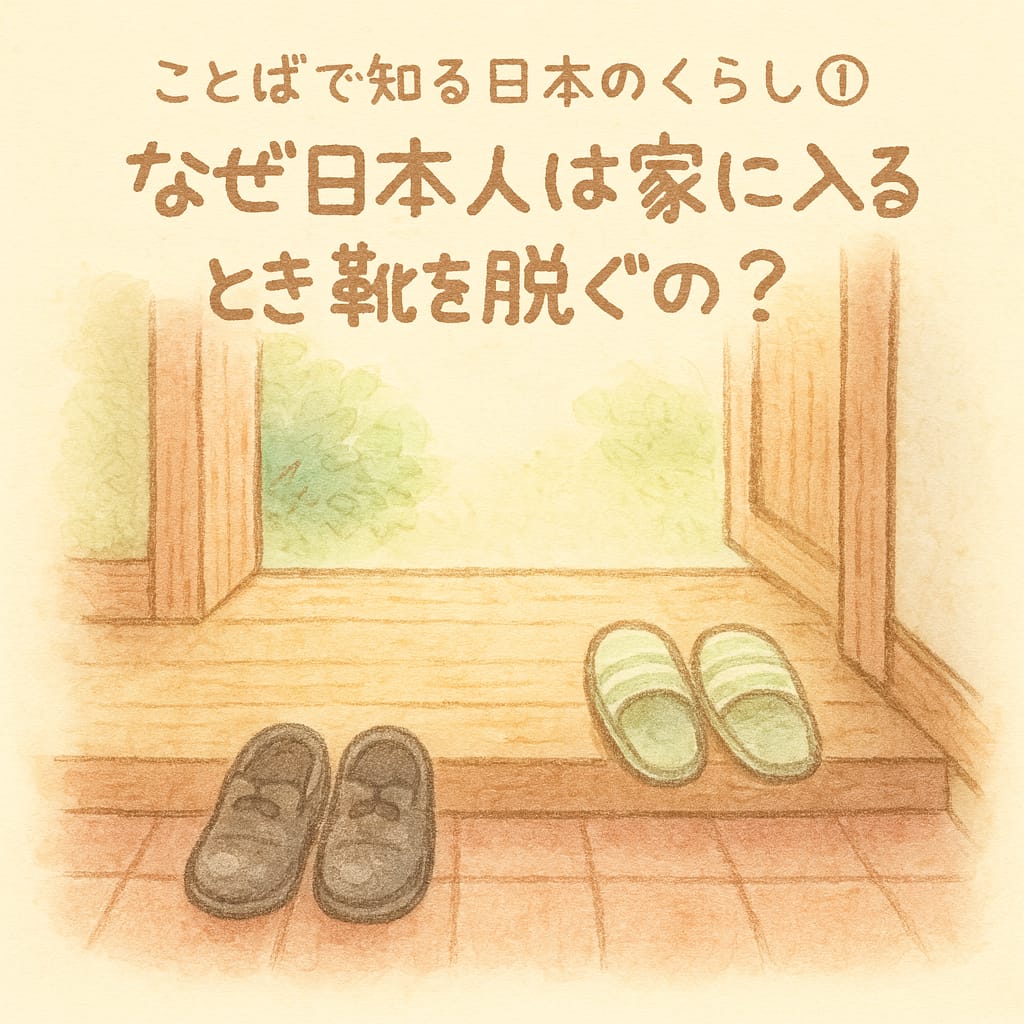
In Japan, it is customary to take off your shoes when entering a home. In some countries, people keep their shoes on indoors. So, why do people in Japan 「靴を脱ぐ」(take off their shoes)? This habit is connected to Japanese words and ways of thinking.
| Japanese | Reading | Meaning/Usage |
|---|---|---|
| 「玄関」 | 「げんかん」([ɡeŋkaɴ]) | The entrance area of a home; the place to take off shoes; the boundary between outside and inside. |
| 「お邪魔します」 | 「おじゃまします」([odʑamaɕimasɯ]) | A greeting when entering someone’s home; it conveys “I’m sorry to intrude; excuse me for disturbing you.” |
| 「お上がりください」 | 「おあがりください」([o aɡaɾi kɯdasai]) | A polite way to say “Please come in.” |
| 「土足」 | 「どそく」([dosokɯ]) | Wearing shoes indoors. In Japan, you often see “「土足禁止」” meaning “No shoes inside.” |
| 「スリッパ」 | 「すりっぱ」([sɯɾippa]) | Light indoor footwear; an item that sits between outside and inside. |
The 「玄関」(げんかん, entrance area) is not just a doorway. It is the space that clearly separates “outside” and “inside.”
In Japanese, there are many words that distinguish “inside” and “outside.”
This feeling of separating inside and outside also appears in the act of removing shoes. Taking off your shoes at the 「玄関」 is not only to keep dirt out of the home. At the same time, it helps you switch your mindset and get ready to relax.
Japanese uses the pattern 「お + ます-stem of a verb + ください」 to make polite requests.
Structure:
お + 動詞のます形 + ください(polite request pattern)
例:お + 上がり + ください → お上がりください(Please come in)
Usage: Use this expression when politely asking someone to do something. At the entrance, 「上がる」 means “to enter the house.” 「お上がりください」 sounds more welcoming and respectful than simply “Please come in.”
Examples:
| Cultural Action | Corresponding Japanese Expressions | Background |
|---|---|---|
| Taking off shoes at the entrance | 「お邪魔します」「お上がりください」 | Awareness of separating inside and outside; cleanliness |
| Using slippers indoors | 「どうぞ、スリッパをお使いください」 | To keep things clean and make everyone comfortable |
| Calling out before entering a house | 「失礼します」 | Getting permission to enter someone’s “inside” space |
Next: Learning About Life in Japan Through Words (2)
Types and meanings of bows: When should you give a slight bow?